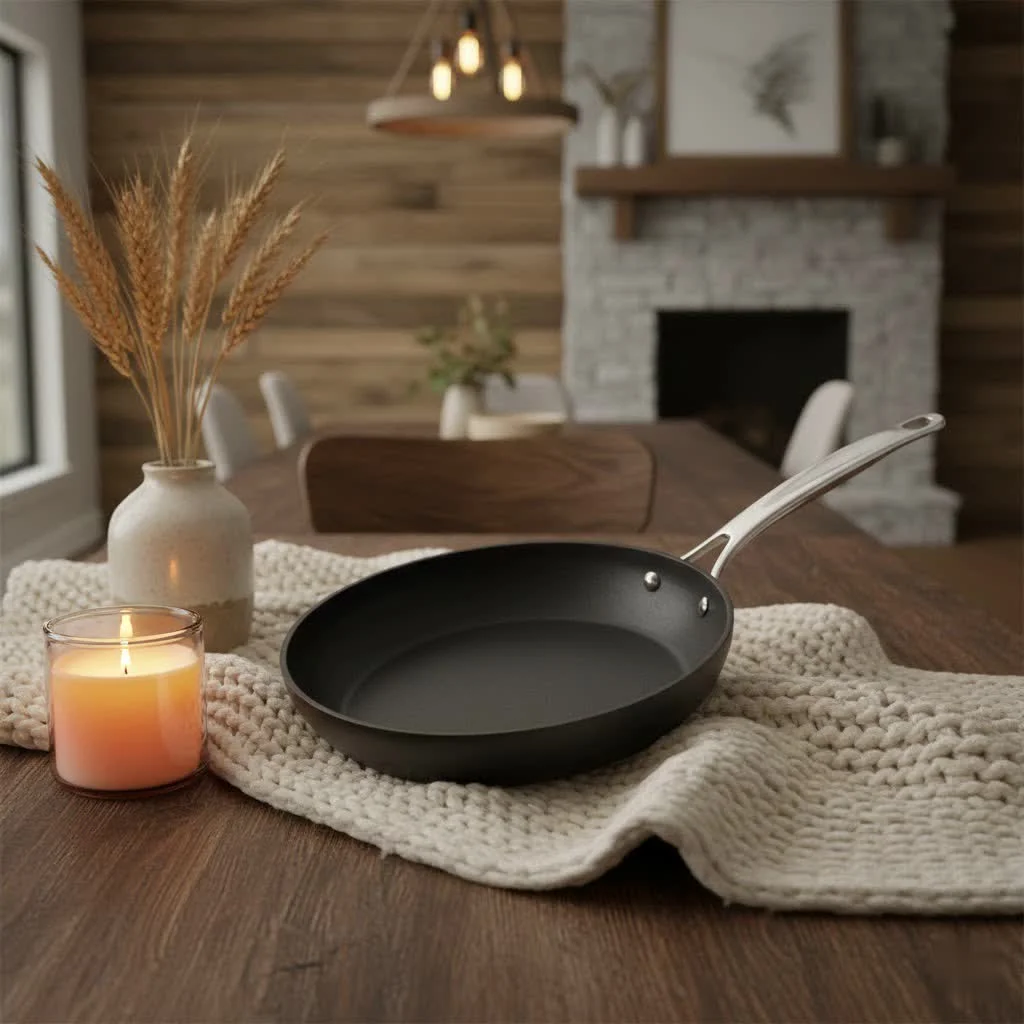
An induction frying pan is a specialized piece of cookware designed to work with induction cooktops, which use electromagnetic fields to directly heat the pan itself. These pans are distinguished by their ferromagnetic base, typically made from materials like cast iron, magnetic stainless steel, or carbon steel, allowing them to respond to the cooktop’s magnetic field for rapid and precise heating. This technology offers unparalleled speed, precise temperature control, enhanced safety, and superior energy efficiency compared to traditional gas or electric stoves.
The Science Behind the Sizzle: How an Induction Frying Pan Works
Forget flames and glowing electric coils. Induction cooking is a game-changer because it heats your food directly, right inside the pan. It’s all thanks to a fascinating principle called electromagnetic induction. Beneath the glass surface of an induction cooktop are coils that generate an oscillating magnetic field when you turn them on. When a compatible induction frying pan is placed on this field, the magnetic forces cause tiny electrical currents to flow within the pan’s base. This internal resistance then generates heat directly within the pan itself.
Think of it like this: instead of the heat source warming the cooktop, which then warms the pan, which then warms your food, an induction cooktop turns the bottom of your induction frying pan into the actual heat source. This direct transfer of energy means less wasted heat and incredibly fast, responsive cooking. When you adjust the setting, the heat changes almost instantly, giving you an impressive level of control that traditional stovetops can only dream of.
What Makes a Frying Pan “Induction Ready”? Materials and Compatibility
The key to an induction frying pan’s ability to heat up lies in its base: it must be made from a “ferromagnetic” material. Simply put, it needs to be magnetic. This is why not all your old pots and pans will work on an induction cooktop – if it doesn’t attract a magnet, it won’t heat up.
The easiest way to check if your existing cookware, or a potential new purchase, is induction compatible is with a simple “magnet test.” Grab any fridge magnet and hold it to the bottom of the pan. If the magnet sticks firmly and doesn’t fall off easily, congratulations – your pan is induction ready! Many manufacturers also include a distinctive symbol on the pan’s base, often resembling a coil or a series of loops, to clearly indicate induction compatibility.
So, what materials are usually induction-friendly?
- Cast Iron: A classic for a reason, cast iron is naturally ferromagnetic, making it an excellent choice for induction frying pans. It offers superb heat retention and even heating.
- Magnetic Stainless Steel: While not all stainless steel is magnetic, many modern stainless steel frying pans are designed with a magnetic base or core to ensure induction compatibility. Look for higher quality stainless steel for the best results.
- Carbon Steel: Often called the “sibling” of cast iron, carbon steel shares many of its magnetic properties and offers great searing capabilities, making it a fantastic induction frying pan option.
- Clad Materials: Many high-performance induction frying pans feature multi-clad construction. This typically involves layers of highly conductive materials like aluminum or copper sandwiched between magnetic stainless steel layers. This clever design combines the magnetic properties needed for induction with the excellent heat distribution of aluminum or copper.
On the flip side, materials like pure aluminum, pure copper, glass, or ceramic will not work on an induction cooktop unless they have a bonded magnetic layer on their base. Using an incompatible pan won’t damage your cooktop, but it simply won’t heat up, leading to a frustrating cooking experience. If you have a cherished non-induction pan you can’t part with, induction adapter discs are available. These metal plates sit between your cooktop and the pan, allowing the adapter to heat up and transfer that heat to your non-compatible cookware, though with slightly less efficiency than a direct connection.
The Perks of Precision: Why Choose an Induction Frying Pan?
Upgrading to an induction frying pan paired with an induction cooktop isn’t just a minor tweak to your kitchen; it’s a significant enhancement to your entire cooking process. The benefits are truly transformative.
Unrivaled Speed: Faster to the Sizzle
|
Our Picks for the Best Frying Pan in 2026
As an Amazon Associate I earn from qualifying purchases.
|
||
| Num | Product | Action |
|---|---|---|
| 1 | All-Clad D3 12\" Stainless Steel Frying pan W/Lid, 3-Ply Stainless Steel Pan, Induction, Oven Broiler Safe 600F Skillet, Professional Cookware, Silver |

|
| 2 | Amazon Basics Ceramic Nonstick Pots and Pans Cookware Set, Dishwasher & Oven Safe, Even Heating, 10-Piece Set, Copper Color |
|
| 3 | Amazon Basics Non Stick Kitchen Cookware 8-Piece Set, Non-Induction, Includes Pots and Pans, Black |
|
| 4 | Amazon Basics Non Stick Kitchen Cookware 15-Piece Set, Non-Induction, Includes Pots, Pans, and Utensils, Black |
|
| 5 | Lodge 10.25 Inch Cast Iron Skillet – Pre-Seasoned Frying Pan with Teardrop Handle – Oven, Stovetop, Grill & Campfire Use – Made in USA – Durable, Non-Toxic, Even-Heating Cookware – Black |
|
| 6 | Ammeloo Tri-Ply Stainless Steel Frying Pan Set of 3, 8\", 9.5\", 11\", Non Stick Frying Pans and Skillets, Non Toxic Hybrid Pan, Induction Compatible Cooking Pans, Chef Pan, Black Interior |
|
| 7 | Yonida Non Stick Frying Pans, 12-inch with Lid, Hybrid Frying Pans Nonstick Upgrade,non stick Skillets Stainless Steel, Dishwasher & Oven-Safe, Induction Compatible Cooking Pan, PFOA Free Cookware |
|
| 8 | SENSARTE Nonstick Frying Pan Skillet, Swiss Granite Coating Omelette Pan, Healthy Stone Cookware Chef\'s Pan, PFOA Free (8/9.5/10/11/12.5 Inch) (9.5 Inch) |
|
| 9 | CAROTE Nonstick Frying Pan Skillet,Non Stick Granite Fry Pan Egg Pan Omelet Pans, Stone Cookware Chef\'s Pan, PFOA Free,Induction Compatible(Classic Granite, 8-Inch) |
|
| 10 | Tramontina Professional 10-Inch Non Stick Frying Pan, Heavy-Gauge Aluminum Skillet with Reinforced Nonstick Coating, Red Handle, Dishwasher and Oven Safe |
|
One of the first things you’ll notice with an induction frying pan is how incredibly fast it heats up. We’re talking about getting water to a rolling boil or oil to searing temperature in a fraction of the time it takes with gas or electric. This rapid response means less waiting around and more efficient meal preparation, saving you precious minutes, especially on busy weeknights.
Pinpoint Temperature Control: Master Your Mince
Induction cooking offers an almost instantaneous response to temperature adjustments. Turn the heat up, and your induction frying pan reacts immediately. Turn it down, and the heat dissipates with equal speed. This level of precise control is invaluable for delicate tasks like simmering sauces, melting chocolate, or achieving the perfect caramelization without burning. No more worrying about liquids boiling over or foods overcooking because the heat lingered too long.
Energy Efficiency: Cooking Smart, Not Hard
Because induction cooktops directly heat the pan and not the surrounding air, there’s minimal heat loss. This makes induction cooking significantly more energy-efficient than traditional gas or electric stoves. Nearly all the energy generated goes directly into your food, which means lower energy bills and a smaller environmental footprint.
Enhanced Safety: A Cooler Kitchen, a Calmer Cook
With no open flames and a cooktop surface that remains relatively cool to the touch (it only gets warm from residual heat transferred back from the hot pan), induction cooking is inherently safer. This significantly reduces the risk of accidental burns, making it an excellent choice for households with children or pets. Plus, without burning food or gas combustion, your kitchen air quality improves dramatically.
Effortless Cleanup: Wipe and Go
Since the induction cooktop surface doesn’t get intensely hot, spills and splatters don’t bake onto the glass. A quick wipe with a damp cloth is usually all it takes to clean up messes, making post-cooking cleanup a breeze. Say goodbye to scrubbing burnt-on food from stovetop grates!
A Healthier Home Environment: Breathe Easier
“Switching to induction isn’t just about cooking better; it’s about living better,” says Chef Elise Dubois, a renowned culinary consultant. “The reduction in indoor air pollutants, compared to gas cooking, is a game-changer for home health and truly elevates the entire kitchen experience.”
Choosing Your Perfect Partner: Key Considerations When Buying an Induction Frying Pan
With so many options available, selecting the ideal induction frying pan can feel overwhelming. Here’s what to keep in mind to ensure you make the best choice:
Material and Construction: The Foundation of Performance
- Flat, Sturdy Base: This is paramount. An induction frying pan needs a perfectly flat bottom to ensure maximum contact with the cooktop surface for even and efficient heat transfer. A thin or warped base will lead to hot spots and uneven cooking.
- Base Thickness: For slow, steady cooking and excellent heat retention (think stews or long-simmered sauces), a heavy-based induction frying pan, often cast iron or a thick clad material, is ideal. For dishes requiring quick heating and rapid temperature changes, like searing or sautéing, a multi-layered stainless steel base will perform beautifully.
- Non-Stick Coatings: If you prefer the convenience of non-stick, ensure the pan’s core material is induction compatible. Modern non-stick induction frying pans often feature magnetic bases.
Size and Shape: Matching the Tool to the Task
Consider the types of dishes you prepare most often and the size of your induction hob zones. A small frying pan for eggs, a medium one for everyday sautéing, and a larger one for family meals might all be necessary. If you enjoy stir-fries, look for an induction-compatible wok with a flattened bottom designed to make full contact with the hob.
Quality and Durability: An Investment in Your Kitchen
Investing in a high-quality induction frying pan pays dividends in the long run. Well-constructed pans distribute heat more evenly, last longer, and stand up to frequent use. Look for reputable brands and read reviews to ensure durability and consistent performance.
Oven and Dishwasher Safety: Added Convenience
Check if the induction frying pan is oven-safe. This adds incredible versatility, allowing you to start dishes on the stovetop and finish them in the oven. Similarly, dishwasher-safe pans offer a huge convenience for easy cleanup, though handwashing often prolongs the life of non-stick coatings.
Maintenance and Care for Your Induction Frying Pan
To ensure your induction frying pan serves you for years, proper care is essential. Always allow your pan to cool before washing to prevent warping. For non-stick surfaces, use gentle sponges and avoid abrasive scrubbers. For cast iron or carbon steel, follow specific seasoning instructions to maintain their non-stick properties and prevent rust. Avoid extreme temperature changes, which can damage any pan, and always use utensils appropriate for your pan’s surface to prevent scratches.
Frequently Asked Questions (FAQ)
Q: Can I use my old frying pans on an induction cooktop?
A: Only if they have a magnetic base. The simplest way to check is with a magnet: if it sticks firmly to the bottom of your pan, it’s compatible. Otherwise, you’ll need new induction-ready cookware.
Q: What symbol indicates an induction frying pan?
A: Look for a symbol on the bottom of the pan that resembles a horizontal coil or a series of four loops. Many manufacturers also explicitly state “induction compatible” in the product description.
Q: Do induction frying pans cook food faster?
A: Yes, induction frying pans heat up significantly faster than traditional gas or electric pans because heat is generated directly within the pan itself, leading to very little energy loss.
Q: Are induction frying pans safe?
A: Induction cooking is generally considered very safe. The cooktop surface remains relatively cool, reducing the risk of burns, and there are no open flames or gas emissions.
Q: Is induction cookware more expensive?
A: While induction-specific cookware can sometimes have a higher initial cost due to the materials and manufacturing processes involved, the investment is often justified by its energy efficiency, faster cooking times, precise temperature control, and enhanced durability, leading to long-term cost savings.
Conclusion
The induction frying pan is more than just a piece of cookware; it’s a gateway to a more efficient, precise, and enjoyable cooking experience. From its rapid heating capabilities and precise temperature control to its enhanced safety features and easy cleanup, the benefits are clear. As you embark on your culinary journey with an induction cooktop, choosing the right induction frying pan is crucial for unlocking its full potential. So, take the magnet test, consider your cooking needs, and invest in quality cookware that will elevate every dish you create. Embrace the future of cooking and transform your kitchen into a hub of culinary excellence!

The explanation of how induction works with electromagnetic fields was really clear. I was hesitant to switch from gas, but the enhanced safety aspect really sold me. I’ve been using my new induction pan for a few weeks now, and it’s fantastic for quick weeknight dinners. No more worrying about open flames!
I bought an induction frying pan after hearing about the energy efficiency. It definitely heats up quickly, which is nice. My only complaint is that the handle on the cast iron one I got gets pretty hot, even though the pan itself is supposed to be safer. I have to remember to use a mitt every time.
I’ve been using induction for a while, and the precise temperature control is what I love most. It makes searing meats so much easier without burning. I did try a carbon steel pan based on a recommendation, and while it heats up fast, it needs a bit more seasoning and care than I expected. Still, a great cooking experience overall.
I finally upgraded to an induction cooktop and needed new pans. This guide was super helpful in understanding the ferromagnetic base requirement. I ended up getting a magnetic stainless steel pan, and the heating speed is truly incredible. My old electric stove feels like a dinosaur now!